

Adjunctive Education

CBCT 3D Scan: Why It Matters for Implants and Periodontics

Learn why CBCT 3D imaging is used for dental implant planning, bone evaluation, sinus anatomy, nerve location, and complex periodontal care.

Sterling | Leesburg | Aldie | Winchester

CBCT 3D Scan: Why It Matters for Implants and Periodontics from NOVA Implant & Perio Specialists
34+
Years
4
Locations
Board Certified
All periodontists

Quick Answer

What Patients Need to Know

CBCT 3D imaging creates a three-dimensional view of the teeth, jawbone, nerves, sinuses, and surrounding anatomy. It is often used when two-dimensional X-rays do not provide enough information for implant planning or complex periodontal treatment.

For dental implants, CBCT helps evaluate bone volume, angulation, sinus position, nerve pathways, and whether grafting or guided surgery should be considered.

Key Points

  • CBCT shows anatomy in three dimensions instead of flat images only.
  • It helps evaluate bone height, width, density, nerves, and sinus anatomy.
  • CBCT can support implant planning, grafting decisions, and surgical safety.
  • The scan is quick and uses a focused dental imaging field.
Why 3D Imaging Can Change the Plan

A standard dental X-ray can show useful information, but it cannot always show bone width, exact nerve position, or sinus anatomy. CBCT imaging helps the specialist see the area from multiple angles.

That information can affect implant position, implant size, whether bone grafting is needed, whether a sinus lift is needed, and whether guided surgery may improve precision.

  • Bone height
  • Bone width
  • Nerve position
  • Sinus anatomy
  • Root shape
  • Implant spacing

What Patients Experience During the Scan

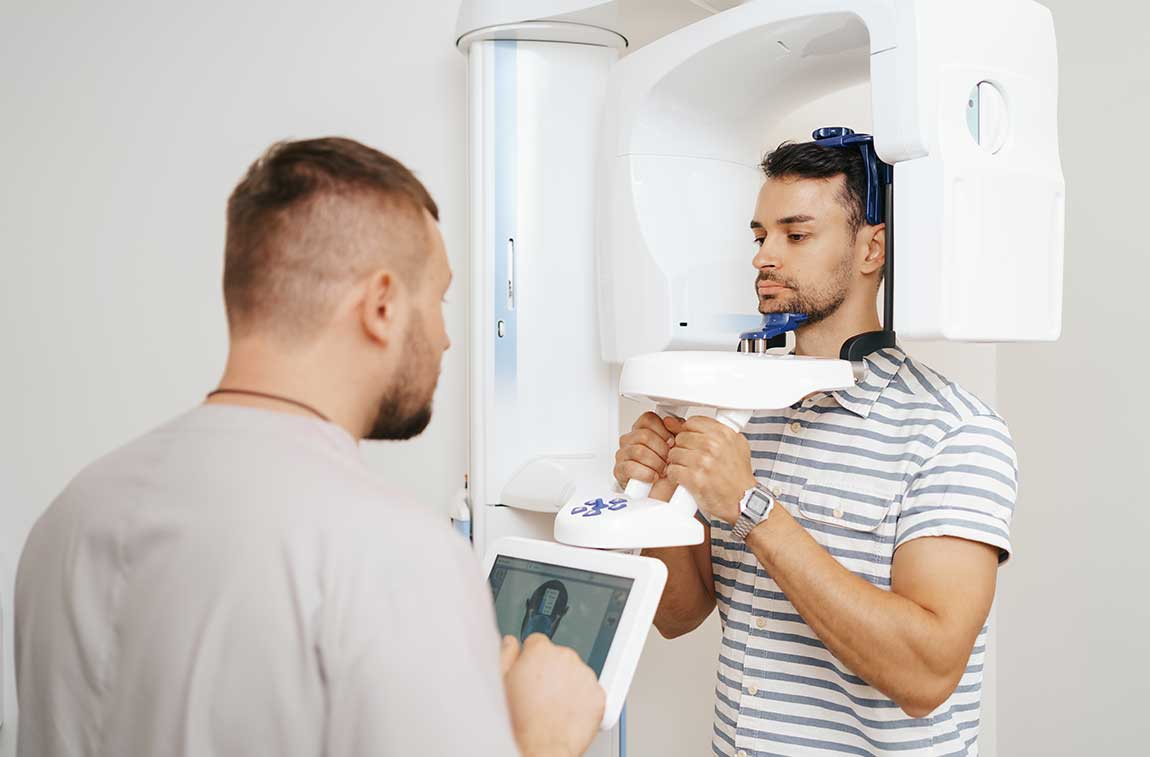
The scan is quick. Patients stand or sit while the machine rotates around the head. The team reviews the images and uses them to explain anatomy, diagnosis, and treatment options.

CBCT is not needed for every dental question, but it is commonly recommended for implant planning and complex periodontal or surgical cases.

How CBCT Supports Safer Treatment

By identifying important structures before treatment begins, CBCT helps reduce guesswork. It can also support communication with the restorative dentist, laboratory, or surgical guide planning process.

Patients often find that seeing the 3D image helps them understand why certain steps are recommended.

Northern Virginia Specialty Care

Supportive Care Across 4 Locations

NOVA Implant & Perio Specialists provides periodontal and dental implant specialty care in Sterling, Leesburg, Aldie, and Winchester. Education pages help patients prepare, but the right plan depends on a specialist evaluation with Dr. Jean-Claude Kharmouche and the periodontal team.

CBCT 3D Scan FAQs

Answers to common questions about this supportive care topic.

Is CBCT the same as a medical CT scan?

No. Dental CBCT uses cone beam technology and a focused field designed for dental and jaw imaging.

Do all implant patients need a CBCT scan?

Many implant cases benefit from CBCT, but the specialist determines what imaging is appropriate.

How long does the scan take?

The image capture is usually very quick, often under a minute.

Ready to Talk With a Periodontal Specialist?

Request an appointment to review your symptoms, treatment goals, comfort needs, imaging, and supportive care options.